Rotten Tomatoes
Suggestions will appear as you start typing. Submit search Movies Tv shows RT App New News Showtimes

The Idiot

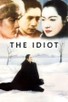
Play trailer Poster for The Idiot 1951,  2h 46m,  Drama Play Trailer Watchlist
Watchlist 60% 10 Reviews Tomatometer 73% 1,000+ Ratings Popcornmeter
60% Tomatometer 10 Reviews 73% Popcornmeter 1,000+ Ratings
In post-World War II Japan, childlike veteran Kinji (Masayuki Mori) suffers from post-traumatic stress-induced seizures, and, after treatment at a mental health institution in Okinawa, he returns to his hometown. There he meets and becomes romantically caught up with two women — Taeko (Setsuko Hara) and Ayako (Yoshiko Kuga). Another man, Denkichi (Toshirô Mifune), is passionately in love with Taeko, too. So when Kinji begins favoring Taeko, a violent conflict erupts between the two men.

Critics Reviews

View More
Grant Watson Fiction Machine Apr 9, 2022
5/10
The Idiot is overwrought, over-long and ultimate quite a chore through which to sit. Go to Full Review
Dwight MacDonald Esquire Magazine Aug 12, 2019
In The Idiot, Kurosawa exhibits none of that cinematic originality and virtuosity that delighted us in his other films of the same time. The photography is routine when it is not actually amateurish. Go to Full Review
Michael E. Grost Classic Film and Television Dec 3, 2016
Difficult but rewarding drama with outstanding events and location photography of Hokkaido. Go to Full Review
Dan Jardine Cinemania Aug 16, 2011
60/100
Motivation switches on a dime, and the story takes the long way around to get anywhere it's going. Go to Full Review
Louis Proyect rec.arts.movies.reviews Jun 11, 2010
Hobbled mostly by the original material, a Dostoevsky novel, as well as an 80 minute cut imposed by the studio bosses, it is still worth seeing, especially for Kurosawa fans--this means everybody obviously. Go to Full Review
Sean Axmaker Turner Classic Movies Online Mar 25, 2010
Kurosawa's passion comes through in his creative solution to the challenge of long dialogue scenes... and in the gentle beauty of the snow-covered location footage... Go to Full Review
Read all reviews

Audience Reviews

View More
Finn W Apr 6, 2019 The Idiot (1951) by Akiro Kurasawa is a wonderful piece of cinematography showing the perfect and fresh adaptation of Dostoevsky â" the classical Russian drama which comes here with the Japanese features. Dostoevsky has been Kurosawa's favourite writer throughout his life. Making a movie based on his greatest novel appeared to be one of the pivotal moments of Kurosawa's career. It was not well received in Japan upon release which is understandable. Comparing The Idiot with other Japanese movies of the 1950-s it seems to be very foreign to the Japanese. Moreover, it might make no sense for those who don't know the original novel. Perhaps this is also a reason to explain why the movie is not famous in the Occidental world. However, from my point of view it is a great adaptation with Masayuki Mori, Setsuko Hara and Toshiro Mifune who understood their Dostoevsky's characters very well. We can see it is still Dostoevsky, though everything in the movie lives in a Japanese dimension. Calling it fully Japanese would be far-fetched, though. It's Russian-Japanese environment of philosophy, theatre and cinema. And I can't forget to mention one of the most beautiful Japanese actresses Yoshiko Kuga portraying Ayako-Aglaya. She had stolen my heart! Yoshiko Kuga and Masayuki More are frequent screen collaborators, and all their joint works are always romantic. Idiot is certainly the best collaboration of them. Also, Toshiro's Mifune temperament and emotions are perfect to show the personality of Akama-Rogozhin. Kurosava's Idiot is just fantastic! See more
Rey G Mar 6, 2018 Very, very strange. The melodrama is too much but there are very quietly beautiful scenes that draw you in. One of the only kurosawa films that i'M just not sure what to think given its toRturing demand for highly theatrical performances anD longwinded narrative. See more
Finn G Mar 18, 2017 I'm glad this film is as long as it is, because it needs time to collect itself; admittedly, I'm utterly confused for at least an hour as to what's going on, who's who, who she's been fucking, etc. But the complexity of the confusing circumstances, something of a love quintangle at least, makes it all the more entertaining. Who is Nasu? Why is she so desired? There are more attractive women around, like Ayako - what's all the fuss over Nasu? The casting of Masayuki Mori as Kameda is the whole show, his face tells us a thousand stories the instant we see him, and will have this effect for the rest of the film. Kurosawa is keen on this, anticipating the face reveal by having Akama's (Mifune) leg cover his lips and nose, a foreshadow of the role he will play in Kameda's life. It is also Kameda's eyes which play a key role in affecting the other characters, welling up feelings and thoughts they'd otherwise suppress. They see a man walking with constant truth, and as Kameda has stared death in the face, we believe that nobody can quite understand what he does. The scene between Kameda and Akama in Akama's home is brilliantly written and staged. Deeper and deeper Akama leads him into his home, we know he's jealous of the effect Kameda has on Nasu, we sense the danger Kameda may be walking into. Through the scene, Akama is self-conflicted with his desire to both kill and like Kameda; it's interesting to remember Akama was the first person in the movie to sympathize with Kameda's PTSD. The scene is gradual with character shifts, Akama warming up to Kameda's friendly smile. They drink, have pleasant conversation aside from Nasu. Then Kameda becomes enamored with a butcher's knife, which worries Akama. Eventually Kameda has to leave, but they get stuck talking about charms they keep on them, Kameda's the more valuable - a rock taken from the scene of his near-death experience - while Akama's is more forced, an amulet his mother made him carry; they make an exchange. Then they have tea and food with Akama's mother, settling deeper into friendly warmth. But there's something off putting in all this, how his mother seems to be in another world, and he mistreats her. I cant quite explain the effect this part has on me as the camera pushes in on mother's spaced out smiling face with what sounds like a child's music box laying over the image, perhaps a creepy sadness in the idea of mother and son stuck together like this. Finally, as they're about to part, Nasu comes up again, and Akama begins to lose himself, conflictedly telling Kameda to have her. In the silent montage that follows, Akama stalks him before finally revealing himself and trying to murder him with the butcher's knife. But Kameda is revered for his brutal honesty, and he doesn't act like a proud prick accepting death, or fighting back, but all Akama sees is a scared child mercifully screaming for life, and he can't bring himself to harm him. The movie at this point has me gripped, and finds a fitting fade out to end the first part. We're asking: whose Nasu going to end up with? And is anyone going to end up with Ayako? The film comes full circle, ending as confusingly as it began, and isolating the two characters who opened the story: Kameda and Akama. Kurosawa had brilliantly foreshadowed the symbol of intrigue between them at the onset of the film, their images reflected against a glass encasement of her photograph as they compared their views of her; Kameda's sympathetic, Akama's cold. Now she is the death of them, but it's not exactly clear how. Her devotion to Kameda has turned Akama into her killer. It causes Ayako to flee under Nasu's threat. Kameda's empathic powers have evolved telepathically, he feels Akama looking for him, and they find each other. What follows is a carefully staged scene of slowly unraveling madness, lit in a dark cold room. Akama looks away into nothingness and sees things, clouds and rainbows. The way Kameda walks behind the patterned glass with a lamp, casting a reflection onto Akama... or the light shining through Nasu's room divider as they go to look at her dead body, and the pattern it casts on them. What's crazier is that Kameda, this symbol of empathy throughout, extends this as far as not even being angry that Kamada has killed Nasu, proving his feelings for her were less about passion and more understanding. She would've killed for him, but not him for her. His need to empathize carries him to his own death, questioning Akama about how he did it, then inexplicably falling to his death. See more
Finn R Feb 11, 2011 Kurosawa's take on Dostoyevsky that kept me interested and showed me a different side of Japanese rural culture.
Read all reviews
The Idiot

My Rating

Read More Read Less WRITE A REVIEW EDIT REVIEW POST RATING
And Quiet Flows the Don 81% And Quiet Flows the Don Watchlist Men Call It Love 0% Men Call It Love Watchlist Heartbeat Detector 80% 48% Heartbeat Detector Watchlist The Lower Depths 83% 79% The Lower Depths Watchlist I, the Worst of All 80% I, the Worst of All Watchlist Discover more movies and TV shows. View More

Movie Info

Synopsis In post-World War II Japan, childlike veteran Kinji (Masayuki Mori) suffers from post-traumatic stress-induced seizures, and, after treatment at a mental health institution in Okinawa, he returns to his hometown. There he meets and becomes romantically caught up with two women — Taeko (Setsuko Hara) and Ayako (Yoshiko Kuga). Another man, Denkichi (Toshirô Mifune), is passionately in love with Taeko, too. So when Kinji begins favoring Taeko, a violent conflict erupts between the two men.
Director
Akira Kurosawa
Screenwriter
Eijirô Hisaita, Akira Kurosawa
Production Co
Shôchiku Eiga
Genre
Drama
Original Language
Japanese
Release Date (DVD)
Jan 15, 2008
Runtime
2h 46m
Join The Newsletter Join The Newsletter Cookie Settings