Rotten Tomatoes
Suggestions will appear as you start typing. Submit search Movies Tv shows RT App New News Showtimes

The Great Dictator

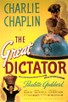
Play trailer 1:54 Poster for The Great Dictator G,  1940,  2h 8m,  Comedy Play Trailer Watchlist
The Great Dictator: Trailer 1 The Great Dictator: Trailer 1 Now Playing View more videos
Stream Now Watchlist 92% 53 Reviews Tomatometer 95% 25,000+ Ratings Popcornmeter
92% Tomatometer 53 Reviews 95% Popcornmeter 25,000+ Ratings
After dedicated service in the Great War, a Jewish barber (Charles Chaplin) spends years in an army hospital recovering from his wounds, unaware of the simultaneous rise of fascist dictator Adenoid Hynkel (also Chaplin) and his anti-Semitic policies. When the barber, who bears a remarkable resemblance to Hynkel, returns to his quiet neighborhood, he is stunned by the brutal changes and recklessly joins a beautiful girl (Paulette Goddard) and her neighbors in rebelling.
Watch on Fandango Stream Now

Where to Watch

The Great Dictator

Stream Prime Video HBO Max

Watch The Great Dictator with a subscription on Prime Video, HBO Max, rent on Fandango, or buy on Fandango.

The Great Dictator

What to Know

Critics Consensus

Charlie Chaplin demonstrates that his comedic voice is undiminished by dialogue in this rousing satire of tyranny, which may be more distinguished by its uplifting humanism than its gags.

Read Critics Reviews

Critics Reviews

View More
Kat Sachs Chicago Reader Feb 7, 2025
Chaplin’s iconic speech at the end of the film is only too relevant nowadays. Go to Full Review
William Goss Film.com Jun 1, 2011
The first full-blown talkie from the biggest star of the silent era, complete with a message that Chaplin couldn't have sent more loudly or clearly. Go to Full Review
TIME Magazine Sep 3, 2010
Through no fault of Chaplin's, during the two years he was at work on the picture dictators became too sinister for comedy. Go to Full Review
Josh Larsen LarsenOnFilm Apr 28, 2026
3/4
Charlie Chaplin was not messing around. Go to Full Review
George Orwell Time and Tide Oct 2, 2023
What is Chaplin’s peculiar gift? It is his power to stand for a sort of concentrated essence of the common man, for the ineradicable belief in decency that exists in the hearts of ordinary people, at any rate in the West. Go to Full Review
Sean Axmaker Stream on Demand Aug 19, 2023
... confronts the hatred and anti-Semitism of Hitler’s Germany in the days before America’s entry into World War II while lampooning the despots responsible. Go to Full Review
Read all reviews

Audience Reviews

View More
Feb 5, 2019 Director: Charles Chaplin Writer: Charles Chaplin Key Players: Charles Chaplin â" Hynkle and The Jewish Barber Paulette Goddard â" Hannah Jack Oakie - Napaloni Producer: Chales Chaplin and Carter DeHaven One important thing to keep in mind when watching this film today is that Charlie Chaplin started writing The Great Dictator in 1938. During this time, the US had not intervened in Europe and there was a certain level of awareness about what Hitler was doing. However, this does not take away from the fact that even with what was known about the situation Chaplin took a huge risk when he produced this film. Regardless of some of the criticism and pushback he received he was determined to deliver his message. In filming this movie, I think he did a great job showing the audience both the life that a man like Hitler lived and the struggles and persecution that the Jewish community faced due to his horrific ruling. As a political satire, in this film Charlie plays the role of Hynkle Dictator of Tomainia. From the very beginning we can see that he is clearly portraying Adolf Hilter. Jack Oakie who plays the role of Napaloni, also does a fantastic job ridiculing the real-life Benito Mussolini. As his other character of the Jewish Barber, Chaplin once again does a great job using his comedy skills to demonstrate the harsh treatment from the Nazi soldiers and their living conditions. In the mist of all the chaos I think it was a great idea to see a romance evolve between the Jewish Barber and Hannah, played by Paulette Goddard. This added a good balance to the tone of the film. Itâ(TM)s the message in the speech at the end of the movie where we find the social justice in this film, and a truly moving point for the audience. Having been the first movie Chaplin did with sounds, he could not have taken advantage of this in a better way. This was my favorite part of the movie and even after so many years his words stand true. His speech leaves us with the message that as humans we are not to live with hate towards one another but instead universal brotherhood and encouraging one another to live freely and happy. His message of democracy encourages viewers to fight for what is right and just and not to be overcome by evil. In addition to the speech, another production highlight is the great job Chaplin does playing two completely different characters and how they do, yet donâ(TM)t relate to each other since one is Jewish and the other Nazi. For a film that was produced in the late 1930â(TM)s early 1940â(TM)s I thought that the sets for each scene were very well designed and realistic. For example, the side of the buildings in the Ghetto and the yard of the Jewish community. Another thing that stood out to me was the music used, I think it was well chosen and helped set the tone of the scene. The only negative I would say was the plane scene which obviously was very fake-looking. However, in their defense it was the 1930â(TM)s. Some of the cinematic devices that stood to me was mainly the use of many closeups and once again the appropriateness of the music and sounds used made each scene powerful and engaging. How he closed one scene and moved to the next was very organic â" for example when the Jewish community is gathered and the scene end and shifts to a day in the life of Hynkel . In conclusion I highly recommend watching this film with an open mind. Although it may be a bit hard to watch or laugh at the comedy given the reality of the situation, itâ(TM)s important to watch the entire film and understand Chaplinâ(TM)s purpose in his production. This movie reminded me a lot about Do The Right Thing as they both portray the struggles and social injustice of two different communities during a different point in time. See more
Albus R Feb 3, 2019 Charles (Charlie) Chaplin wrote and produced the movie The Great Dictator in 1940. If you have read up on this film, Iâ(TM)m sure you have read that it is a political satire where Chaplin pokes fun at Adolf Hitler and the Nazi regime. In this move, Chaplinâ(TM)s first sound picture (talkie), he plays dual roles. The role of Adenoid Hynkel, a dictator of Tomainia, and a Jewish Barber from the Ghetto, injured in the World War (Year 1918). Right from the start, the comedic side of Chaplin audiences have come to love and appreciate is evident. While there is a disclaimer that there should be no comparison made between Hynkel and the Jewish Barber, aside from the wardrobe, there is no material change in the features to distinguish the two characters. As such, Chaplin is able to brilliantly present, life in the shoes of the dictator of Tomainian, who lives in a lavish palace surrounded by men who wait on him hand and foot. In addition, as well as of the Jewish barber, who fought in the war and now returns home to the Ghetto where orders of persecution have befallen on his town and people. Oblivious to the oppression and maltreatment of Jews, the Jewish barber quickly comes up to speed through his neighbor, Hannah, (role played by Paulette Goddard) who holds her own by showing her comedic skills and bringing laughter to the screen in combination with Chaplin. This is of particular importance considering the serious nature of the trials and tribulations Jewish people were encountering in Europe. Bringing levity to the film at a time when there were rumblings of the beginnings of persecution by Hitler and German Storm Troopers was no easy fete. As a matter of fact, it was of much contention as to whether the project should proceed. Given the main characterâ(TM)s strong resemblance to Adolf Hitler there was fear that the movie could create an uproar as a result of the political stance conveyed by the movie against anti-Semitism. Yet, Chaplin defiantly forged ahead despite rumors of potential censorship and the rest is history. As an early aged movie, it was filmed in black and white. The final production is in the cinematic technique â~mise en sceneâ(TM), framed as if in a picture, where everything the director wishes one to see is included in that particular frame. As a result, the characters are seen walking off to the left and right disappearing from the picture and subsequently walking into others. Other techniques used by Chaplin are long shorts, also known as â~establishing shotsâ(TM) to show a particular location or area, â~zoomâ(TM) and â~panâ(TM) to get a good closeup of the characterâ(TM)s faces, as well as to follow them as they move from side to side. However, you will note that when characters fall below or above the camera shot, their heads may not be visible. One of the most success factors in The Great Dictator, in my opinion, is the non-diegetic sounds used to add to the audienceâ(TM)s entertainment. For example, when the Jewish barber shaves a man, his actions follow the music. In addition, when Hynkel dances with a giant inflatable ball, it is done so in an amusing way, again, to music. Finally, other techniques to bring levity to the movie is Chaplinâ(TM)s gibberish German speak as he makes fun of a pseudo-dictator the likes of Hitler with words like cheese and crackers and bananas amongst others ending with coughing fits â" hilarious! The very end of this movie is where everything comes together. Again, if you read up on this movie, you probably also read about âthe speechâ?. Yes, the speech which sums up the message Chaplin wishes to be clear and noteworthy to the audience. It is the call to social justice in addition to social change required by all human kind for the benefit of the greater good. In the speech lies the recipe to unite and achieve success as one and for one â" democracy and opportunity for all regardless of our differences. As I think about the final scene, it reminds me of the final scene in Napoleon Dynamite where Pedro (Napoleon Dynamiteâ(TM)s friend running for President), has to also make a speech to win the hearts and minds of the student body. Although these two movies were written and produced in different eras, 1940 vs. 2004, these movies are very similar in that they depict the challenges and infighting between popular majority/big guy vs. the minority population/little guy where the directors felt it important to capture the fear and intimidation in the faces of the main characters (i.e., Chaplin as the Jewish barber and Jon Heder as Napoleon Dynamite, an awkward high school young man). Chaplin and Heder, in character, know that this is their chance and once in a lifetime opportunity to shine and face their opponents and adversities. The reaction both receive from the people is eerily quiet at first but then evident how their final acts were received. I wonâ(TM)t say any further as I donâ(TM)t want to spoil the surprise. I will finish off by saying that this is a classic must see movie. I really enjoyed seeing the movie and highly recommend taking the time to rent the movie. It may have been Charlie Chaplinâ(TM)s first talkie and his last box-office hit, but it is one which has and continue to withstand time. My recommendation for this movie is 4.5 stars! See more
Hagrid W Feb 3, 2019 The Great Dictator is a turning point for films by Charlie Chaplin. This film, while still very comedic and satire, had an incredible message and empowering aspects that were very new when it first was released and still relevant to this day. Chaplin wrote, directed, and stared in this film, much like he did with his other films. However, this film was a turning point and very distinguishable from others at the time. At the time, the effects of the Holocaust were not well known and this brought it to light to others; through cinematic scenes, such as the one with the globe that gave imagery to what Hitler was planning on doing with the world and his power. This was also a turning point for Chaplin since was a breakthrough in the sense this was his first film where he would break his typical silence. This film showed much influence for social change that it should be a considered a staple for everyone to watch. This film was funny, but also conveyed a very important message to all about standing up for what is right and rejecting fascism and racism by showing the truth of how Jewish people were having their rights stripped away by a dictator. This filmâ(TM)s message resonates from when it was made in 1940, throughout the years, and even through today. We see similar messages in films throughout the decades, such as Do the Right Thing in the 1980s and Blakkklansman from 2018. These other films that are from the recent decades have very similar issues and messages to The Great Dictator. Do the Right Thing shows how minorities in a neighborhood still struggle with racism and other races feeling superior to them. This is exactly what happened in the Holocaust, but also what Chaplin so very well depicted in The Great Dictator. The historical context of the horrors of the Holocaust in a satire sense gave the film that much more power. It showed how this was an actual issue. People loved to see Chaplin movies because he was hilarious and entertaining. Chaplin took to wanting to initiate social change by embracing his greatest strength; getting across an imperative message through his satire films. Overall, The Great Dictator has shown that Chaplin really outdid himself for the time period and set a precedent for films that have similar messages. This film was comedic, but sparked deep thought about right and wrong and social change. Everyone should watch this film. See more
Draco R Feb 3, 2019 The 1940 film The Great Dictator was written and directed by Charlie Chaplin. This film was produced during a very sensitive time of world war and Chaplin had a message to deliver. Much like Spike Lee did with Do the Right thing in 1989. Both of these films were written, directed, and starred the same person so that they could ensure their message was delivered the way they intended it to be. The message in The Great Dictator and Do the Right thing was to fight oppression. Charles Chaplin took a very serious matter and some how managed to turn it into comedic gold. The Great Dictator follows Adenold Hynkel dictator of Tomania and Jewish barber who looks Identical to Hynkel. Both of these main characters are played by Charles Chaplin. Hynkel is attempting to take of the world and start his master race now that he has conquered Tomania. To do that, he must first conquer Osterlich, the country bordering Tomania. However, the army of Napaloni had already started their invasion of Osterlich before they are able to make their move. We then watch Hynkel scheme ways to befriend the dictator of Napaloni and fail hilariously at out smarting him. While this is going on with Hynkel, we witness the Jewish community and Jewish barber suffer through their oppression from the soldiers. Eventually through a series of events including a couple run ins with the Tomanian soldiers, the Jewish barber ends up in a concentration camp. While the Jewish Barber was in the concentration camp most of his Jewish community escaped to the currently unconquered country Osterlich to escape the war. The Jewish barber eventually escapes from the concentration camp to Osterlich just in time to save the country from being conquered. Hynkel gets what he deserves and ends up imprisoned. The Great Dictator really gave me some good laughs, and I found it pleasingly funny. The way Chaplin was able to make such comedic movie, yet sill deliver a strong message about a sensitive subject is impressive. This is a classic movie and I understand how it receives such praise from so many people. This is a movie I would recommend to people looking for a great classic comedy or even World War history buffs. I can see myself watching this movie again, and it was very surprising how good it was. See more
Feb 3, 2019 The Great Dictator is a 1940 comedy drama that was directed by comedian Charlie Chaplin. Following the new fashion of sound films, which had already begun in 1927 (he considered that speaking would be the end of the character of the "vagabond" Charlot, which he was), Charles Chaplin took a step beyond his first audible steps in "Modern Times". In constant struggle to highlight the evils of his contemporary society, the director, as a strong supporter of democracy, decided to criticize an evil that was coming upon them. Asked later about it, he confided that he would have never had imagined how much fear and despair the character would bring to humanity. He went on to say that if I had known what would happen later, he would have never filmed it. He takes advantage of his enormous resemblance to Hitler to create a burlesque parody of his person, in addition to combining it simultaneously with an entertaining drama of a German Jewish barber (Tomeio), who after coming out of deep amnesia, sees his country worse than even when he suffered the accident that caused him to lose his memory during the 1st World War. The conclusion is simply brilliant, unmatched by anyone. The final speech is not only cinema, but a message of freedom that he divulged with his cinema and his prestige (after this film he would be labeled as a Communist), with the hope that he would be immortalized forever, so that man will never forget that we are all the same. The consequences were as adverse as could be imagined: Nazi Germany banned him for life (although it is rumored that Hitler requested more than once to be put in the film), communist Russia did not like too much due this burlesque tone of defending "their" ideals, and finally, in the United States, he again attracted the contempt of the most conservative factions of the population. In conclusion, this is an immortal film whose transcendence leaves the screen to make the world aware and the audience thoughtful, and to show that cinema is not only entertainment, but also a vehicle of information and knowledge. See more
Feb 3, 2019 Basic Info Director: Charlie Chaplin Writer: Charlie Chaplin Key Player: Hitler actor, two ministers, Jewish barber, Producer: Charlie Chaplin Brief Story Description The film begins with the main character in the middle of a heated battle followed by him and a pilot then crashing and realizing that the war is over and the side he was fighting for lost. The entire story is on the premise of making fun of dictators, specifically Hitler and Mussolini. The same character of the poor barber plays the hilarious dictator. During this time, he could have very well been killed for making fun of these dictators. Production Highlights (positive or negative) I would argue the very best part of this film was the speech near the very end. For a few minutes, Charlie speaks about his true feelings while making this movie. ï¿ 1/2 1/2Those who can hear me, do not despairï¿ 1/2 1/2 liberty will never parishï¿ 1/2 1/2 do not fight for slavery, fight for liberty.ï¿ 1/2 1/2ï¿ 1/2Â? Overall Recommendation My overall recommendation would be to watch the speech at the very end of this film. Although it is funny throughout the entire film, the speech of unity and inclusion at the end makes this movie well Done. Conclusion I would conclude that Charlie Chaplin wrote this film beautifully and the speech at the end should be watched many more times. Up this point, I had not seen that speech. It was truly moving. Social Justice/Change Aspect The social justice aspect of this film is how you should always do what is right. Even if you are a solider, do not fight for injustice and slavery, but fight for liberty. Comparison Historic Context or Development Process The historic significance behind this film were both of the world wars. This film was released in 1940, a horrific time in the worldï¿ 1/2 1/2(TM)s history. Cinematic Device(s) Used Eye level camera angles, log shots, close shots, black and white throughout the duration of the film, sound layovers (exaggerated), diegetic sound, dictator symbols (arm bands, way of speech to crowds, crowds clapping over nonsense speeches), wipe transitions See more
Read all reviews
The Great Dictator

My Rating

Read More Read Less WRITE A REVIEW EDIT REVIEW POST RATING
The Gold Rush 98% 93% The Gold Rush Watchlist TRAILER for The Gold Rush Way Out West 100% 91% Way Out West Watchlist A Hard Day's Night 98% 89% A Hard Day's Night Watchlist TRAILER for A Hard Day's Night The Thin Man 98% 94% The Thin Man Watchlist To Be or Not to Be 96% 93% To Be or Not to Be Watchlist TRAILER for To Be or Not to Be Discover more movies and TV shows. View More

Movie Info

Synopsis After dedicated service in the Great War, a Jewish barber (Charles Chaplin) spends years in an army hospital recovering from his wounds, unaware of the simultaneous rise of fascist dictator Adenoid Hynkel (also Chaplin) and his anti-Semitic policies. When the barber, who bears a remarkable resemblance to Hynkel, returns to his quiet neighborhood, he is stunned by the brutal changes and recklessly joins a beautiful girl (Paulette Goddard) and her neighbors in rebelling.
Director
Charlie Chaplin
Producer
Charlie Chaplin
Screenwriter
Charlie Chaplin
Distributor
United Artists
Production Co
Charles Chaplin Productions
Rating
G
Genre
Comedy
Original Language
English
Release Date (Theaters)
Oct 15, 1940, Wide
Release Date (Streaming)
May 22, 2017
Runtime
2h 8m
Sound Mix
Mono
Aspect Ratio
Flat (1.37:1)
Join The Newsletter Join The Newsletter Cookie Settings